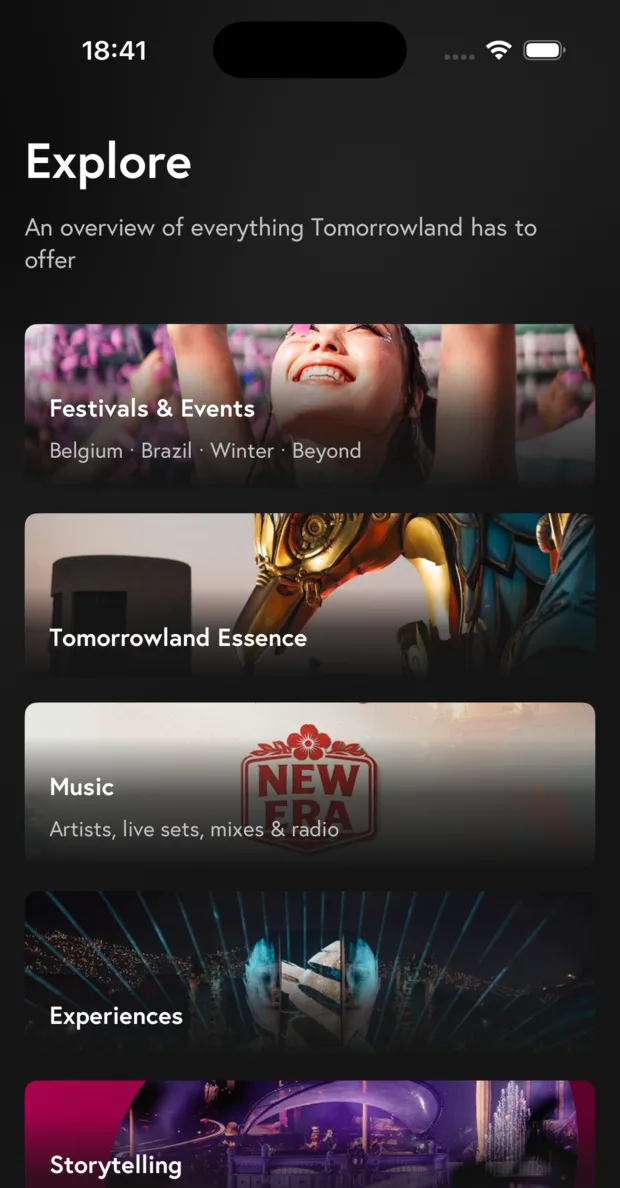
Tomorrowland ran three or four separate Flutter apps: Radio, an app per festival, and Account. They are one React Native codebase now, covering every edition worldwide, with the old radio app's features carried into CarPlay and Android Auto, a full store, and a festival map that has to hold up with tens of thousands of people on it at once. The point of consolidating was not tidiness. It was that a Tomorrowland experience should exist in the eleven months you are not at a festival.
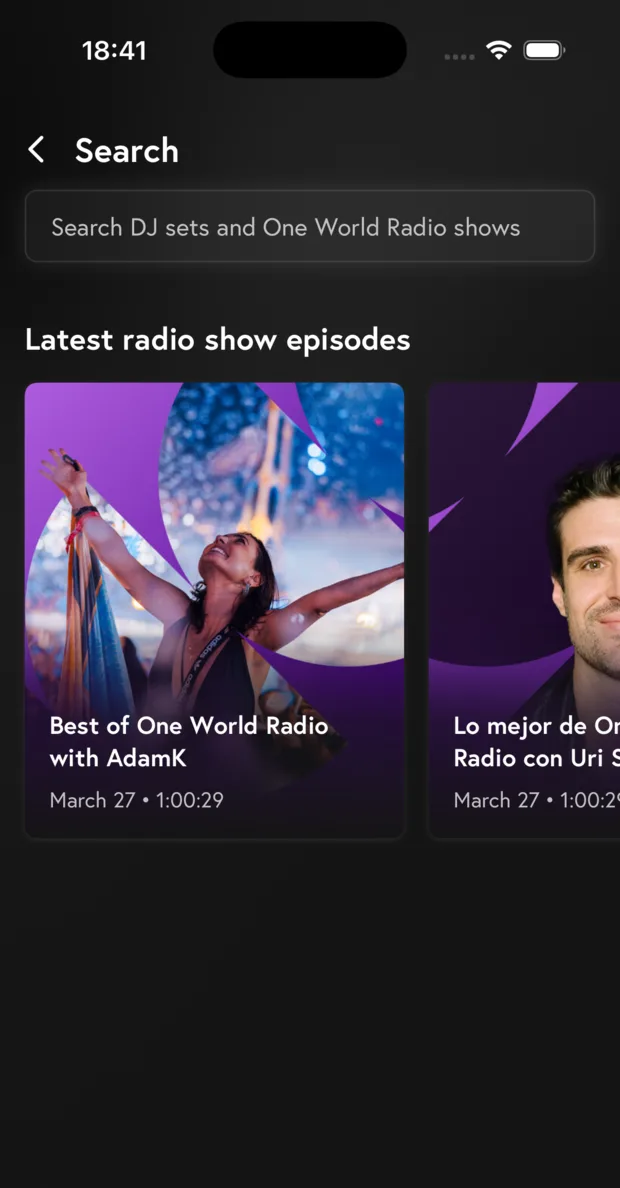
The radio is where most of my time has gone, because a stream that dies on a train is a stream nobody trusts. It recovers from stalls on both platforms now, it knows the difference between a network that dropped and a person who pressed pause, and it stops fighting you when you walk back into signal. Getting there meant writing down how it fails before trying to fix it.
The other half is the content system behind the festival screens. Editorial teams shape what the app shows without waiting on a release, which matters when a lineup changes on the day.